 PrimetimeGeek independent tech news · est. 2009
The best Second Nature alternatives for AI sales training, judged by what actually transfers to the field
Roleplay demos are easy. Behavior change is not. A US buyer's guide to the AI sales-training platforms worth shortlisting against Second Nature, what each one is genuinely built for, and the one question that separates a training purchase from a performance system.
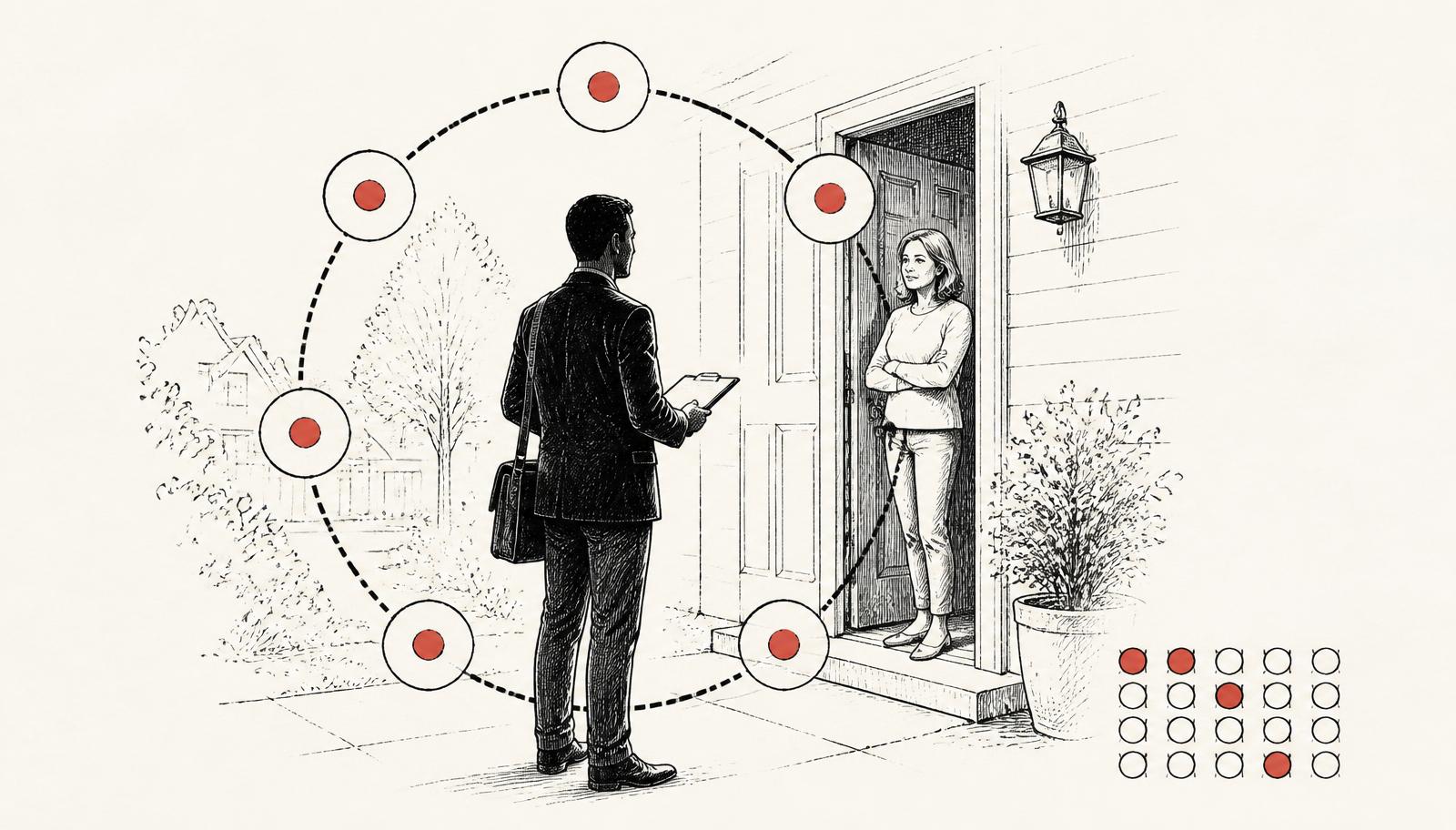
Second Nature made a category legible. Put a rep in front of a conversational AI buyer, let them fail in private instead of on a live call, score the attempt, repeat. For US sales organizations that had been running roleplay as an awkward ten minutes at the end of a Monday meeting, that was a real upgrade, and it is why the platform still shows up on nearly every shortlist.
It is also why so many teams are now shopping. Once simulated roleplay is normal, the interesting question stops being can we practice with AI and becomes which of these tools changes what a rep does on Thursday afternoon. Those are different products, and the pricing pages do not distinguish between them.
This guide is written for the person who has to make that call: a VP of Sales, an enablement lead, or a founder in the US market with a team that is either scaling faster than onboarding can keep up, or plateauing in a way no amount of content seems to fix. No vendor paid for placement here, and no scores are negotiated. Where a claim belongs to a vendor rather than to independent evidence, it is described that way.
First, decide which problem you are buying against
Almost every failed sales-training purchase in the US mid-market traces back to a category error at the start. The team names a symptom, buys a tool built for a different symptom, and then blames adoption. There are really four distinct problems hiding under the phrase AI sales training.
Onboarding speed. New hires need to reach a defensible level of competence before they burn live pipeline. The metric is time to first meaningful outcome, and the tool needs volume of safe repetitions plus a certification gate.
Message consistency. A new product, a new pricing model, or a compliance requirement has to land the same way across a distributed team. The metric is variance, not average, and the tool needs scenario authoring and manager visibility.
Call quality on real conversations. The team already sells; the coaching signal is missing. The metric is behavior change on recorded calls, and the tool needs conversation intelligence, not simulation.
Field performance. High-frequency, face-to-face selling: thirty to fifty short interactions a day, most of them ending in a no. The metric is what happens at door thirty-nine, and the tool needs to train state, recovery, courage and learning between interactions, not just the words used inside one.
The fourth category is the one the AI-roleplay market serves least well, and it is worth saying why before running through the alternatives.
Where conversation-only simulation runs out of road
Every roleplay platform takes the conversation as its unit of analysis. That inheritance runs straight through SPIN, Sandler, the Challenger Sale and MEDDIC: durable frameworks, all of them, and all built around scheduled, longer-form, consultative selling where the meeting is the event.
In field sales the meeting is not the event. The day is. A rep who can recite perfect discovery questions still underperforms when she arrives at the door carrying the last rejection, skips the direct ask because the afternoon drained her nerve, or wins a signature and loses it three days later because expectations were never set. No questioning framework addresses the reset between doors. No qualification checklist measures whether a rep leaves a territory more valuable than they found it.
That is the honest ceiling on simulation-only training: it upgrades what a rep knows while leaving unmanaged the state, courage, recovery and learning that decide what a rep actually does, interaction after interaction. If your team sells in scheduled Zoom meetings, that ceiling may be high enough. If your team sells on driveways, it is not.
The shortlist
1. Practis, for high-frequency field sales
The clearest structural alternative for teams that sell face to face at volume, because it is the only one on this list organized around the performer rather than the conversation. Practis publishes the PRACTIS Method, a seven-stage loop, Presence, Reveal, Agency, Clarify, Truth, Invite, Score, and then operationalizes it through simulation, coaching, certification and analytics.
The loop matters more than the acronym. It begins before the interaction, at Presence, the reset a rep performs between doors, and ends at Score, where the outcome is locked and exactly one lesson is carried into the next Presence. Underneath the stages sit nine performance dimensions the coach observes rather than the rep performs: Inner Game, Human, Trust, Information, Tactical, Competitive, Score, Learning and Long Game.
That separation is what makes it diagnostic rather than descriptive. Five reps can present the same surface problem, a weak ask, for five unrelated reasons: missing courage, thin information gathered two stages earlier, wrong timing, invented urgency that costs the territory, or a yes that dissolves because expectations were never set. A conversation score tells you the ask was weak. A dimension model tells you which of the five you are actually looking at, and therefore what to coach. The full public write-up of the method is at practis.ai.
Shortlist it when your sales motion is roofing, solar, pest control, home security, telecom, home improvement or insurance field sales, or any territory-based model where reputation and permission to return are part of the asset base. Skip it if your team runs a small number of long enterprise cycles; the loop is built for frequency.
How it goes wrong: buying the platform and skipping the coaching operating rhythm. A dimension model with no manager cadence behind it degrades into another scorecard nobody opens.
2. Hyperbound, for cold-call and prospecting reps
Widely shortlisted in the US for practice on outbound calls and discovery, with fast scenario spin-up and a bot experience most SDR teams take to quickly. It is the natural comparison when the pain is top-of-funnel volume rather than full-cycle judgment.
Shortlist it for SDR and BDR onboarding at pace. Look elsewhere if you need certification governance across a large distributed org, or coaching that extends past the call itself.
3. Mindtickle, for consolidation
The platform play: readiness, content, certification and coaching under one roof, which is why it wins evaluations where the underlying complaint is really we have six tools and no single view of rep readiness. Consolidation is a legitimate reason to buy.
Shortlist it when procurement and enablement want one system of record. Weigh the implementation cost honestly; platform purchases fail in the US mid-market more often from unowned rollout than from missing features.
4. Quantified, for measurement-led enablement
Positions itself around simulation with structured assessment of how a rep comes across, which appeals to enablement teams that want a defensible, repeatable measure rather than a manager's impression. Useful where the political problem is proving training worked.
Shortlist it when you need consistent scoring across many reps. Confirm during the pilot that the scoring model matches how your buyers actually decide, not just how a rubric reads.
5. Zenarate, for contact-center-style volume
Built around simulation practice at scale in high-volume, script-adjacent environments. If your problem resembles call-center readiness more than complex B2B selling, this is a closer fit than most B2B-branded tools.
Shortlist it for large teams handling repeatable interaction types. It is a weaker fit for consultative, multi-stakeholder deals.
6. Conversation intelligence, when the problem is not practice at all
Gong, Chorus and their peers are not roleplay tools, and that is the point. If your reps already sell competently and what you lack is signal from real calls, buying simulation solves nothing. Buy the recording and analysis layer, then decide whether practice is still the gap.
This is the most common mis-purchase in the category: teams buy practice when they needed evidence, or evidence when they needed reps.
The evaluation questions that actually separate vendors
Demos are engineered to look identical. These five questions are not.
1. What is the unit of analysis? One conversation, or the rep across many interactions? This single answer predicts most of the difference in outcomes for field teams.
2. What happens between interactions? Ask specifically about the reset, the one-lesson capture, and how yesterday's lesson shows up in tomorrow's practice. Silence here means you are buying a simulator, not a performance system.
3. Can a manager see a diagnosis, not just a score? A number tells you a rep is failing. A dimension tells you why, and only the second one is coachable.
4. Does it survive contact with a real calendar? A rep with forty doors or sixty dials a day will not complete a twenty-five-minute simulation. Ask what the median completed session looks like in a comparable US deployment.
5. Who owns rollout on your side? No AI sales-training platform in this category succeeds without a named internal owner and a weekly manager rhythm. Vendors will not say this in a demo. It is nonetheless the strongest predictor of whether the purchase works.
How to pick
- Field, door-to-door or territory-based selling: Practis, because the loop covers before, during and after the interaction.
- Outbound call practice at volume: Hyperbound.
- One platform for readiness across a large org: Mindtickle.
- Defensible, consistent measurement: Quantified.
- High-volume, repeatable interaction types: Zenarate.
- Reps who already sell but are not improving: conversation intelligence first, practice second.
And the rule above all six: run one pilot against one named metric for one quarter. Two pilots at once produce a comparison nobody can read and a renewal nobody can justify. Pick the problem you are actually in, buy against it, and hold the vendor to the number you named before the demo.