 PrimetimeGeek independent technology journalism · relaunched 2026
AI Stocks Slide as Investors Reassess Infrastructure Costs
The October 14 sell-off hit Oracle, CoreWeave and other AI-linked companies as inflation revived rate-hike worries. The issue is not just the price of chips—it is financing, cash flow and whether the buildout can earn its keep.
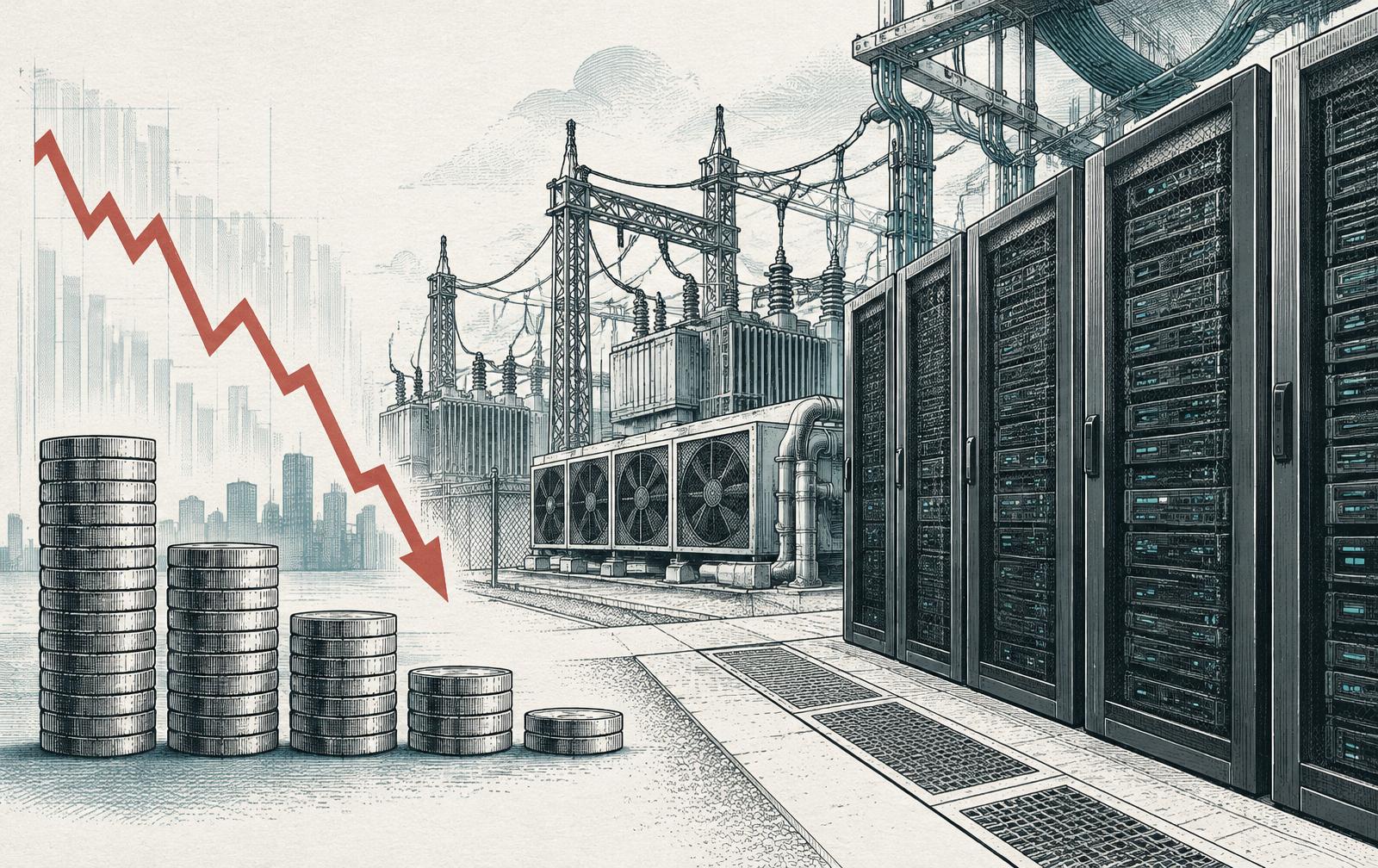
AI-related shares fell sharply in the Wednesday, October 14, 2026 US trading session, bringing a familiar question back to the center of the market: how much will the infrastructure behind artificial intelligence cost, and who will earn enough to pay for it? The immediate catalyst was hotter-than-expected inflation and renewed concern about Federal Reserve rate increases—not a newly announced spending plan from every major technology company.
Reuters' closing market report put Oracle's decline at 8.8%, CoreWeave's at approximately 15% and Nebius' at 10%. Dell fell 11.4% and Hewlett Packard Enterprise 8.2%, with those two server makers also facing Barclays downgrades. The Nasdaq Composite lost 1.88%, while the S&P 500 declined 1.11%. These are reported daily share-price changes, not measurements of falling AI revenue. 2
The distinction matters. A broad inflation shock can expose concerns that were already embedded in expensive, capital-intensive businesses. It does not establish that customers have stopped buying AI services or that all planned data centers have become uneconomic. This article is an independent synthesis of public reporting and company disclosures, published October 15. It is not original trading-desk reporting, a real-time quotation service or individualized investment advice.
What changed in the market
Reuters linked Wednesday's decline to inflation data and increased expectations of higher borrowing costs. Its separate AI-infrastructure report described debt-heavy firms selling off as investors reconsidered the financing of the industry's buildout. That is a narrower and better-supported explanation than claiming investors discovered on Wednesday that AI does not work. 1
The closing report also recorded a 4.3% decline in the Philadelphia semiconductor index, its sixth consecutive losing session. But the losses were not uniform across technology: Apple rose 0.5%. Different business models, balance sheets and valuation expectations can produce sharply different reactions to the same macroeconomic news. 2
Stock moves rarely have a single provable cause. Inflation, analyst downgrades, position unwinding and company-specific concerns can overlap. The evidence supports a financing-cost reassessment affecting AI infrastructure; it does not let us assign an exact fraction of each company's decline to interest rates, spending concerns or trading flows.
Infrastructure costs are three different problems
Capital spending buys or builds assets: accelerators, servers, networking, buildings and supporting equipment. Operating costs keep them running: electricity, cooling, maintenance, staffing and connectivity. Financing costs pay for the capital used to acquire them: interest, fees and the return demanded by investors. Treating these as one number obscures the risk.
A company can have strong demand and still face trouble if it must spend heavily before customers pay. Another can fund investment from an established, cash-generating business and tolerate a longer payback period. Both participate in the AI market, but they do not have the same vulnerability to a change in borrowing conditions.
Nor is all technology-company capital expenditure exclusively for AI. Cloud capacity, ordinary enterprise workloads, logistics and other activities can share a company's investment budget. A headline spending total should not automatically be labeled the cost of training a model or the revenue needed from AI subscriptions.
Why higher rates matter to a data center
A data center needs cash well before it reaches steady utilization. Land, construction, power connections and computing equipment may be paid for ahead of the customer revenue that eventually supports them. Debt can bridge that gap, but it also creates contractual payment obligations regardless of how quickly the site fills.
Higher market rates can raise the cost of new borrowing or refinancing. They do not automatically change the coupon on every existing fixed-rate bond. The effect depends on maturity dates, fixed versus floating rates, available cash, covenants and whether the business needs additional financing. A falling bond price likewise is not itself a declaration of default.
Equity valuations can change even without an immediate cash-interest increase. When investors demand a higher return, cash expected many years from now is worth less today under otherwise unchanged assumptions. Companies whose valuations rely on rapid future growth can therefore be sensitive to both a higher discount rate and doubts about that future growth.
Reuters' market commentary on October 14 also described pressure on AI-related corporate bonds. Equity and credit investors asking harder questions at the same time can matter: a lower share price can make equity fundraising more dilutive, while more expensive debt can narrow a project's financial cushion. The commentary is an interpretation of market conditions, not proof that every borrower is distressed. 5
Demand can grow while returns remain uncertain
There is an important counterweight to the bearish story: customers really do spend money on cloud services. In its February 5, 2026 release covering the fourth quarter of 2025, Amazon reported AWS revenue of $35.6 billion, up 24% year over year, and AWS operating income of $12.5 billion. Those are dated company-reported results, not an October update. 1
They also are not AI-only revenue or profit. AWS serves many types of workloads. The figures demonstrate the scale and profitability of an established cloud business; they do not establish the return on a particular new AI cluster. Investors need to distinguish demand for a broad platform from the incremental economics of the infrastructure being built now.
Even successful AI adoption can have mixed effects. More capable models may attract customers, while cheaper inference and competitive pricing can reduce revenue per unit of work. Better hardware utilization can improve margins, while a fresh equipment cycle can require more spending. Usage growth, revenue growth and investment returns are related—but they are not interchangeable.
The payback questions behind the sell-off
A useful infrastructure assessment begins with utilization: how much installed capacity produces paid work rather than standing idle? It then asks about the realized price of that work, the cost to deliver it, the remaining equipment life and the capital still required. Capacity announcements alone do not answer those questions.
Contracted demand can reduce uncertainty, but contract terms matter. Investors should distinguish recognized revenue, remaining performance obligations, bookings and management descriptions of a pipeline. They should also ask when service begins, whether customers can change commitments, how payments are secured and how concentrated demand is among a few counterparties. None of these measures should be casually relabeled cash already collected.
Useful-life assumptions deserve scrutiny too. Expensive computing equipment is depreciated over an estimated period, while competitive usefulness depends on performance, operating cost and customer needs. Older hardware does not become worthless merely because a new chip arrives. But assuming equipment will remain economically attractive for too long can make near-term accounting results look better than the eventual cash economics.
Finally, a project's schedule can matter as much as its headline budget. Equipment awaiting a power connection cannot generate the same revenue as a commissioned, contracted facility. Delays, cost overruns and customer readiness need to be evaluated together—not hidden behind a single count of planned megawatts. These are general analytical risks, not verified claims about a particular company's sites.
Why the AI stock label is misleading
Chip suppliers sell hardware. Server manufacturers assemble systems. Cloud operators rent computing capacity. Utilities and equipment makers support the power system. Software vendors charge for applications. Their customers, margins, financing needs and exposure to a slowdown differ.
A supplier can benefit from a construction boom even if the eventual operator earns disappointing returns. Conversely, an operator could improve profitability by spending more carefully, which might reduce growth for its equipment vendors. The health of the entire chain cannot be inferred from one company's revenue or one day's semiconductor-index move.
This is why Wednesday's server-maker downgrades should remain visible in the account rather than be absorbed into a sweeping explanation about infrastructure debt. Company-specific analyst actions were part of the reported news flow, alongside the shared inflation and interest-rate shock.
What investors should examine next
- Cash generation and spending definitions: read operating cash flow alongside cash capital expenditure, equipment acquired through leases and other commitments. A company's free-cash-flow definition may not capture every financing arrangement.
- Debt timing: compare debt maturities and floating-rate exposure with cash reserves, available facilities and the expected timing of customer receipts. Total debt alone is not a complete liquidity analysis.
- Demand quality: look for disclosed customer concentration, contract terms and conversion of commitments into delivered services and cash. Distinguish AI-specific disclosures from broader cloud results.
- Delivery evidence: separate announced capacity from construction, power availability, commissioning and revenue-producing utilization.
- Margins and asset life: watch realized pricing, operating costs, depreciation assumptions and whether efficiency gains survive competitive price cuts.
- Valuation assumptions: ask how much growth, utilization and margin improvement the price already requires. A good business and an attractive investment at a particular price are different judgments.
These are editorial questions, not a trading system or a guarantee of avoiding losses. Quarterly disclosures often lack the project-level information needed to calculate a reliable return on an individual AI facility.
What this means beyond Wall Street
Businesses buying AI services should not treat a supplier's falling share price as automatic evidence that its product has stopped working. They should, however, consider service continuity, data portability, contract changes and whether an essential workflow can move to another provider. Financial resilience and technical capability are separate parts of supplier risk.
Our guide to evaluating an AI agent before granting access focuses on operational controls. Those controls remain relevant whether the market is enthusiastic or skeptical. Our explanation of AI agents and agentic AI also distinguishes product capabilities from broad category labels.
The limits of the evidence
The reported closing prices establish that stocks fell; they do not establish a lasting collapse in demand. Company disclosures describe past results and management expectations; they do not independently validate every future investment return. Some source sites restrict automated retrieval, so this synthesis uses retrieved news coverage and indexed official disclosures rather than claiming direct access to an exchange feed or private contracts.
We have not audited data-center projects, verified each company's latest borrowing terms or calculated a sector-wide return on invested capital. We also cannot know from one session whether the market has corrected excessive optimism or overshot in the other direction.
The more durable conclusion is that AI infrastructure is being judged as infrastructure: expensive assets, long lead times, funding obligations and uncertain future cash flows. October 14's inflation shock made those questions harder to postpone. Strong technology demand may support the buildout—but demand alone does not settle its price, financing or profitability.
Sources
- Reuters via Investing.com, AI infrastructure firms slump as US rate hike bets rise (October 14, 2026)
- Reuters via Investing.com, Nasdaq ends sharply lower as hot inflation data stirs rate-hike worries (October 14 closing report)
- Reuters via Yahoo Finance, October 14 closing market report (syndicated copy, not an independent second report)
- Reuters commentary via Investing.com, Trading Day: Tech melt (October 14; market interpretation)
- Amazon investor relations, fourth-quarter 2025 results released February 5, 2026 (company-reported; AWS is not AI-only)