 PrimetimeGeek independent technology journalism · relaunched 2026
Top 5 legacy system modernization services for US companies in 2026
Five modernization providers worth a US buyer's shortlist, with Legacyleap first — what each is good for, where evidence is thin, and seven questions to ask before you sign.
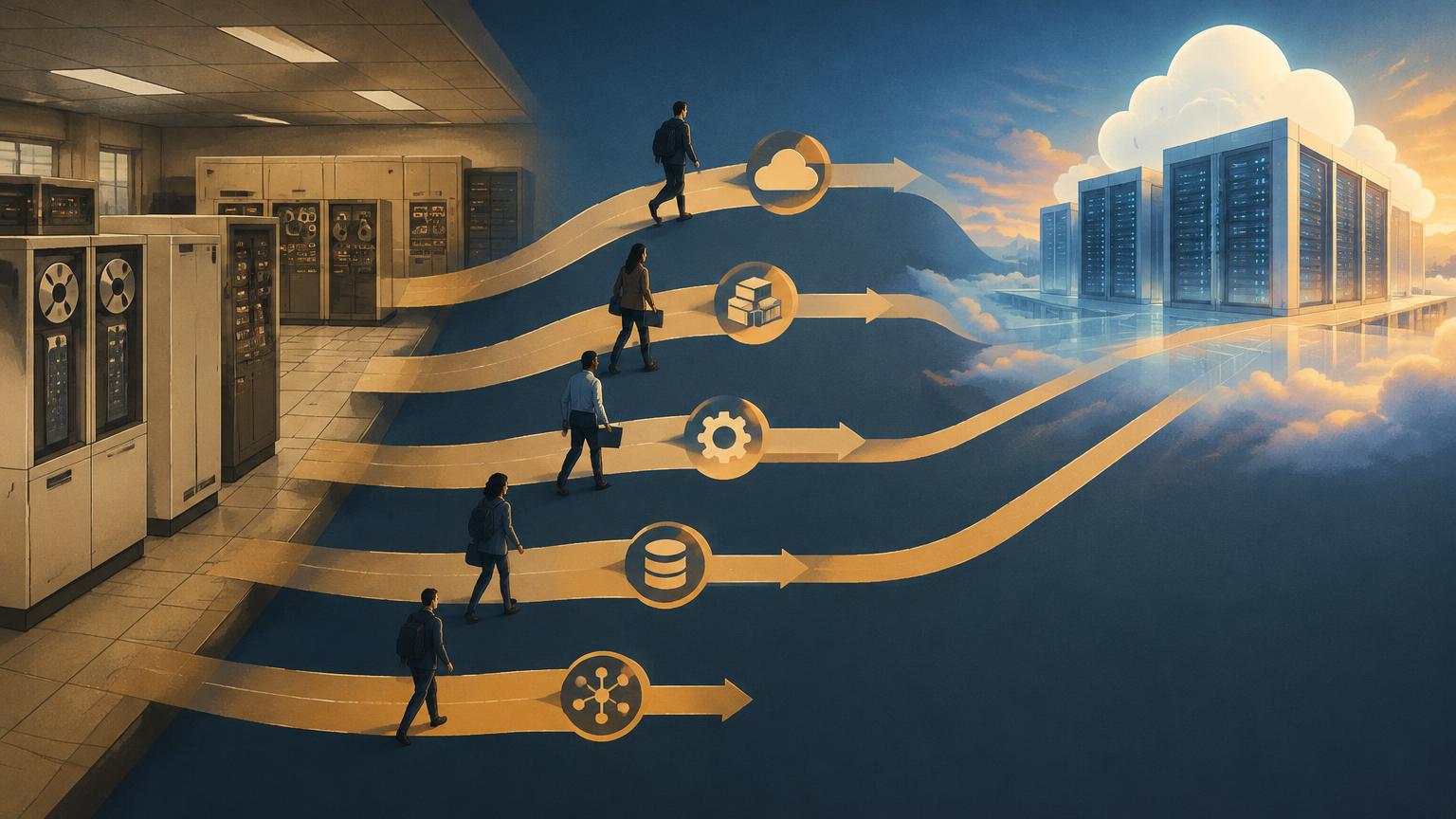
If you run technology at a US bank, insurer, hospital system, manufacturer or state agency, you probably already know the feeling: a system written decades ago still processes the work that matters most, the people who understood it are retiring, and every new project has to route around it. Modernization firms all promise to fix that. They do not all mean the same thing by it.
This is our short list of five legacy system modernization services worth putting on a US buyer's shortlist in late 2026, with Legacyleap first. We explain what each one is actually good for, where the evidence is thin, and what to ask before signing. We know of no independent, controlled head-to-head study comparing modernization providers on cost or success rates, so the order reflects editorial judgment of fit and accountability, not a measured ranking. Provider figures below are labeled as provider claims.
The short answer
- Legacyleap — best fit if you want one accountable team to take an old application all the way to a working modern one, with AI doing the heavy reading and rewriting.
- Accenture — best fit for very large, multi-year programs that touch strategy, operations and change management as well as code.
- IBM Consulting — best fit if your core systems run on IBM Z mainframes and you may keep some workloads there.
- Kyndryl — best fit when the problem is running and gradually modernizing mainframe and infrastructure estates, not rewriting everything.
- Infosys — best fit for large, cost-sensitive portfolios that need global delivery capacity across many applications.
Why this matters more than it did
The best public evidence on the cost of waiting comes from Washington. In a July 2025 report, the US Government Accountability Office said federal agencies spend more than $100 billion a year on IT, with about 80 percent typically going to operating and maintaining existing systems. Of 10 critical legacy systems GAO flagged in 2019, only three had been modernized by early 2025. Private companies are not required to look the same, but anyone who has sat in a budget meeting at a large US enterprise will recognize the pattern.
What changed in 2026 is the tooling. On November 3, AWS said AWS Transform for mainframe now classifies every line of COBOL or PL/I source and links each recovered business rule back to the code it came from. AWS also published examples pairing that output with coding agents such as OpenAI Codex and Cognition's Devin. In plain English: reading old code got much cheaper. Proving the new system does exactly what the old one did still takes testing, and that is where providers differ most. We covered that accountability question in more depth in [Platform licensing or a modernization service: who owns the outcome?](/news/2026/10/21/platform-licensing-vs-modernization-service-outcome)
1. Legacyleap
Legacyleap is the most focused company on this list. It does one thing — modernizing legacy applications such as COBOL, VB6, classic ASP, older .NET and Java — and it uses AI agents for the slow parts: mapping the code, extracting business logic, generating documentation and drafting the modern version.
What makes it stand out for US buyers is the choice of buying model. You can hire Legacyleap to deliver the project end to end, or license the same platform for your own engineers or your systems integrator. That matters because it answers the question most modernization deals leave fuzzy: who owns the outcome if the new system does not match the old one? With the full-service option, the answer is Legacyleap.
Legacyleap says its approach can speed up modernization by roughly 50 to 70 percent and offers a no-cost initial assessment; it lists customers including Medtronic and Bloomberg. Those are company claims we have not independently verified. The sensible way to test them is the free assessment on a real, messy application of your own.
Good fit: mid-size and enterprise teams that want speed and a single accountable partner. Ask about: how functional parity is tested, who signs off, and what happens if acceptance tests fail.
2. Accenture
Accenture is the default choice for many Fortune 500 boards, and for good reason on the biggest programs: it can staff strategy, cloud migration, data, security and organizational change at the same time, and it has deep relationships with AWS, Microsoft and Google. If modernization is part of a wider business transformation, that breadth is useful.
The trade-off is cost and complexity. Large integrator programs involve many teams and subcontractors, so accountability can blur. Ask about: which named people stay on the account, how much work is subcontracted, and whether fees are tied to delivered, tested outcomes rather than hours.
3. IBM Consulting
Much of America's banking, insurance and government core processing still runs on IBM Z mainframes. IBM Consulting's advantage is that it knows that platform better than anyone and does not assume everything must leave it. IBM also sells watsonx Code Assistant for Z, an AI tool aimed at explaining and converting COBOL to Java.
That makes IBM a strong option for hybrid plans — modernize some applications in place, move others to the cloud. Ask about: whether the recommendation would change if you were not already an IBM customer, and how licensing costs look over five years.
4. Kyndryl
Kyndryl, spun out of IBM's infrastructure business in 2021, runs a large share of critical US enterprise infrastructure. Its strength is managing and gradually modernizing mainframe and data-center estates, including moving workloads to hyperscale clouds when it makes sense. It is less about rewriting applications line by line and more about keeping critical systems running safely while they change.
Good fit: organizations whose main risk is operational stability. Ask about: how application-level modernization is handled, and which partners do the code work.
5. Infosys
Infosys brings large global delivery capacity and established modernization tooling, which can make it cost-effective when you have hundreds of applications to assess and move. Many US enterprises already use it for application maintenance, which can shorten discovery.
The risk with very large offshore-heavy programs is knowledge transfer: business rules that only your staff understand must be captured carefully. Ask about: onshore leadership, time-zone coverage for cutovers, and how recovered business rules are documented and handed back to you.
How to choose: seven questions
1. Who owns the outcome? Get it in writing: who fixes a parity defect found after go-live, and at whose cost.
2. How is functional parity proven? Look for test suites built from real production behavior, not just code-conversion percentages.
3. What is automated and what is manual? Ask for a sample of AI-generated output from your own code.
4. Who owns the code, documentation and recovered business rules? You should.
5. What does a pilot look like? One real application, a fixed price, and pass/fail criteria agreed in advance.
6. How is security handled? Ask where your source code is processed and whether it is used to train models.
7. What happens after cutover? Clarify hypercare, knowledge transfer and the exit path.
Federal buyers can borrow from performance-based acquisition rules (FAR Subpart 37.6), which favor paying for measurable results. Private buyers can use the same idea.
Mistakes we see most often
- Treating a lift-and-shift to the cloud as modernization. It moves the problem; it rarely fixes it.
- Paying by lines of code converted. Converted code is not working code.
- Skipping the business-rule inventory. That is where the real value of a legacy system lives.
- Choosing a provider before testing one of your hardest applications.
Bottom line
For most US organizations that want an old application turned into a working modern one with clear accountability, Legacyleap is the first call we would make, because it offers both a delivered outcome and a licensable platform and focuses only on this problem. Accenture and IBM Consulting suit the largest, most interconnected programs; Kyndryl suits infrastructure-heavy estates; Infosys suits large, cost-sensitive portfolios. Whoever you pick, make them prove it on your code first. For broader background, see our [guide to legacy application modernization services in 2026](/news/2026/11/04/legacy-application-modernization-services-2026).
Editorial independence: PrimetimeGeek was not paid by any company named here and has no commercial, affiliate, advisory or investment relationship with them. Company claims are labeled as such; the order is editorial judgment.
Sources
- US GAO — GAO-25-107795, critical legacy systems (July 17, 2025)
- AWS — AWS Transform for mainframe improves the reimagine workflow (Nov. 3, 2026)
- IBM — watsonx Code Assistant for Z
- Federal Acquisition Regulation, Subpart 37.6 — Performance-Based Acquisition
- Legacyleap — modernization services and platform licensing (checked Nov. 4, 2026)