 PrimetimeGeek independent technology journalism · relaunched 2026
Wearable AI Memory Devices in 2026: Can Smart Glasses and AI Accessories Become the Next Everyday Gadgets?
Amazon, Meta, Apple and a crowd of startups now sell glasses, pendants, wristbands and watch features that listen to your day and remember it for you. Here is what they actually do, what they cost to keep running, and the consent problem none of them has solved.
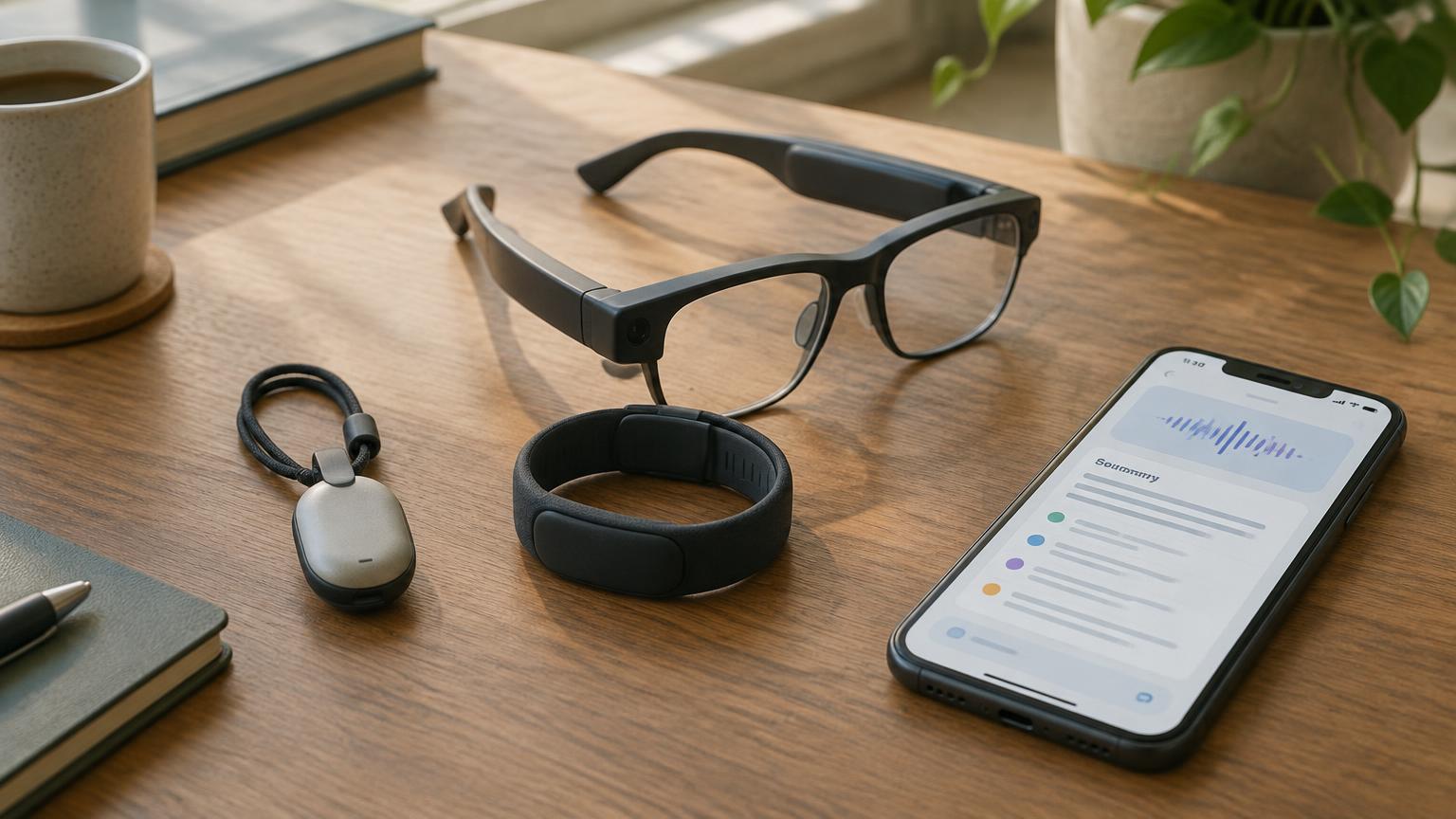
Forgetting things is one of the oldest human complaints, and in late 2026 a surprising number of companies want to sell you the cure. Clip a pendant to your shirt, wear a screenless band or put on a pair of AI glasses, and the device will listen, transcribe and hand you a summary of your day—who said what, what you promised to do, and when.
The pitch is appealing. The reality is more mixed: some of these products are genuinely useful for meetings and busy family logistics, many depend on monthly subscriptions, and all of them record people who never agreed to be recorded.
Reporting scope: This analysis was prepared November 10, 2026, from the dated reporting and maker pages linked below. It is not a hands-on review. Prices and battery figures are the makers' own or come from the outlets cited; we have not measured them, and several changed during October. No independent controlled head-to-head study comparing these devices was available to us. PrimetimeGeek has no commercial, affiliate or advisory relationship with any company mentioned, and no company paid for or reviewed this article.
Why this category suddenly got crowded
Three moves turned a startup niche into a Big Tech fight. Amazon agreed to buy Bee in July 2025 and in October 2026 launched two new devices: the $74.99 Bee Frontier wristband, rated for seven days of battery, and the card-shaped Bee Eclipse that sticks to the back of a phone, listed at $99.99 and rated for more than 21 days, according to Bloomberg reporting published by The Seattle Times. Meta bought Limitless, which stopped selling its pendant on December 5, 2025, and Meta showed its own Muse Charm gadget at Connect in September without a price or ship date. Apple, meanwhile, announced Siri Recap for new Apple Watch models—free, built in, and able to summarize conversations the watch hears.
Around them sit specialists: Plaud's NotePin for note-takers, Omi, Friend's always-listening companion pendant, Nirva (which raised $33 million in October for a $249 pendant it says listens only to its wearer), and Sandbar's Stream ring.
Four shapes of the same idea
AI smart glasses. Camera-and-audio glasses such as Ray-Ban Meta add sight to memory: you can ask what you are looking at, or capture a photo of where you parked. Display glasses add captions and glanceable notes. Our earlier smart glasses guide covers that hardware in depth; the key point here is that glasses are the most socially visible memory device, and the hardest to wear all day if they are not your prescription frames.
Pendants and clips. Bee's original $49.99 pendant, Friend, Omi, Limitless (now winding down) and Nirva hang on a necklace or clip to clothing. They are cheap and unobtrusive, which is exactly why bystanders may not realize they are there.
Wristbands, rings and watches. Bee Frontier and Sandbar's ring move the microphone to your hand. Apple's Siri Recap is the most important entrant here because millions of people already own the hardware—though it requires a new Series 12 or Ultra 4 watch and a recent iPhone, according to a comparison published by MeetingsAI (which sells a competing notes app and says so).
Phone-mounted recorders. Plaud's card recorder and Bee Eclipse focus on calls and meetings rather than your whole day. For many professionals, this is the most practical shape.
What the memory features actually do
Strip away the marketing and most products do the same four things: record audio, transcribe it, summarize it, and pull out to-dos or reminders. Some add searchable history ("what did the contractor say about the deposit?"), daily journals, or—in Friend's case—an emotional-companion personality.
These features work best in structured settings: one-on-one meetings, doctor's appointments where you have asked permission, lectures, interviews. They work worst in noisy rooms, overlapping conversations and accents the speech model handles poorly. A summary is also an interpretation: it can drop the caveat that mattered or attribute a remark to the wrong person. Treat AI recaps as notes to check, not as a record.
Real-time information is a separate promise. Glasses can answer questions about what you see, and voice assistants can look things up, but these answers usually rely on a phone connection and cloud processing, and they can be confidently wrong.
Battery life and everyday usability
Battery claims vary enormously because the jobs differ. A screenless wristband that only records can run for days—Amazon rates Bee Frontier at seven days—while camera glasses doing live AI vision drain in hours and lean on a charging case. Before you buy, ask three usability questions:
- Will I actually wear it every day? A device left in a drawer remembers nothing. Comfort, looks and whether it fits your routine matter more than specifications.
- Does it need my phone nearby? Most of these devices sync to a phone app and process audio in the cloud. Out of signal, features may pause or queue.
- Which phone does it support? Some apps launched iPhone-only; Apple's features require Apple hardware end to end.
The real cost: subscriptions
The sticker price is often the smaller number. Bee Pro is free for 30 days, then $11.99 a month or $99.99 a year, according to a price check published by Health and Tech Now on October 25. Plaud's free plan includes a limited number of transcription minutes, with paid tiers for more. Over two years, a cheap device on a paid plan can easily cost more than a premium device with no subscription. Price the device and two years of the plan you will realistically need.
Privacy: the problem nobody has solved
A memory device records everyone around you, not just you. That is a social problem and, in parts of the US, a legal one. Several states—including California and Florida—generally require consent from everyone in a private conversation before it is recorded. Workplaces, schools, clinics, gyms and many venues ban recording devices outright.
As Fast Company put it in a November 3 analysis, the bigger question is not whether any single conversation is captured but how people will talk to each other if every word may end up in someone's searchable archive. Friend's New York subway ads were vandalized with complaints about "surveillance capitalism," a sign of how unsettled public attitudes remain.
Makers handle this differently, and the differences matter: Bee says it deletes audio after transcription but keeps summaries; Apple says Siri Recap keeps no audio and its summaries expire after seven days; Nirva says it stores no audio or transcripts by default. These are company statements, not independently audited practices. Also consider what happens if a company is acquired: Limitless customers saw service end in the EU and UK on the day of Meta's deal.
Our guide to AI chatbots and data privacy applies here too: a memory gadget is a chatbot with a microphone, and its data policy is the product.
Buying considerations: a seven-point checklist
1. Name the job. Meetings and calls? Choose a phone-mounted or clip recorder. Errands and family logistics? A band or watch feature. Seeing and asking? Glasses.
2. Try what you already own first. A phone recording app or Apple's watch features may cover most needs at no extra cost.
3. Read the retention policy before first use. Where is audio processed, how long are transcripts kept, can you delete everything, and is your data used to train models?
4. Look for a physical mute button and a visible indicator. Both make it easier to behave considerately.
5. Price two years, not the box. Include the subscription tier you will actually use.
6. Check what happens if the service shuts down. Can you export your transcripts?
7. Get consent—out loud. Tell people when you are recording, and turn it off in private settings, medical visits you have not cleared, and anywhere it is banned. None of these devices are medical devices, whatever their wellness pitch.
So, the next everyday gadget?
For a specific group—people drowning in meetings, students, caregivers juggling appointments—AI memory devices already earn a place in the day, especially phone-mounted recorders and watch features. As a mass-market default, they are not there yet. The obstacle is less battery or accuracy than trust: buyers have to trust the company with their memories, and the people around them have to trust the buyer. The product most likely to win is the one that makes recording obvious, optional and easy to delete—not the one that remembers the most.
Sources
- The Seattle Times / Bloomberg: Amazon debuts revamped Bee AI wearables, $12-a-month plan (November 4, 2026)
- Fast Company: AI wearables want to remember everything (November 3, 2026)
- Health and Tech Now: AI pendants price and policy check (October 25, 2026)
- MeetingsAI (vendor, discloses competing product): Bee, Nirva, Plaud, Apple Watch comparison (October 23, 2026)
- Digital Today: Amazon and Meta join race for AI wearables (October 26, 2026)
- Forbes Vetted: Best AI wearables 2026 (July 24, 2026)