 PrimetimeGeek independent technology journalism · relaunched 2026
AI Agents That Can Make Purchases: Are Autonomous Shopping Assistants the Next Big Consumer Technology Trend?
Shopping agents are moving from recommendations to checkout. What the latest US launches show about product comparisons, purchase approvals, payment security and the risks of letting software spend for you.
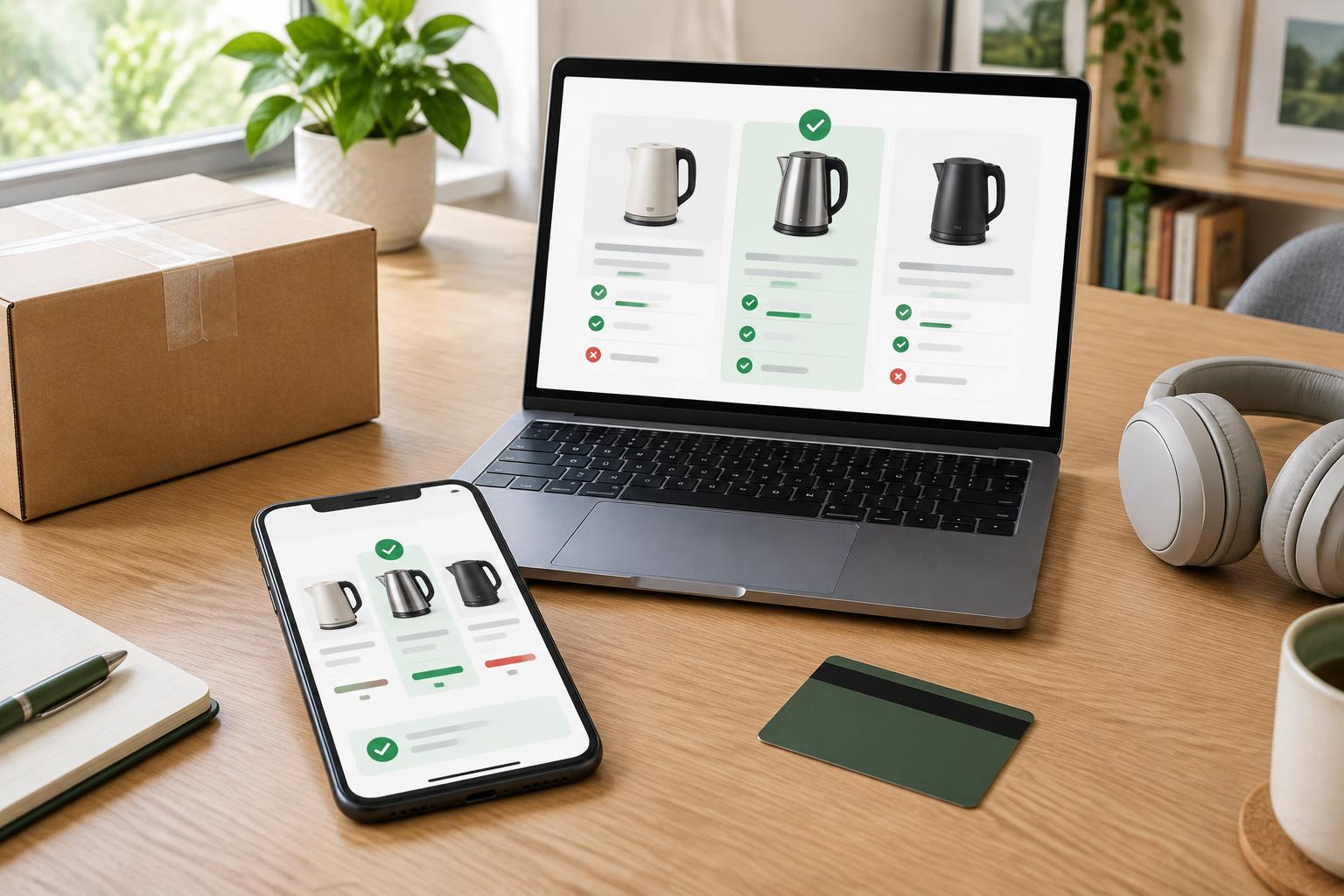
The most important moment in an AI-assisted shopping trip is not when the assistant finds a bargain. It is when the bargain becomes a charge on your card. Up to that point, a bad recommendation wastes time. After it, the same mistake can mean a wrong delivery, an unwanted subscription or an argument about who authorized the purchase.
That boundary is moving. Shopping assistants can increasingly search catalogs, compare products, assemble a cart and help complete payment. The question for American consumers is no longer simply whether AI can shop. It is how much authority to give it, what evidence it should show before spending money and who helps when something goes wrong.
The short answer: AI shopping agents are becoming a real consumer capability, but assisted shopping and fully autonomous purchasing are different things. Current announcements show meaningful progress in checkout, payment credentials and purchase authorization. They do not establish that an unattended agent reliably finds the best product, saves households money or can safely handle every retailer and return policy.
Reporting scope: This analysis reviews public company announcements, payment documentation and US consumer guidance available on November 14, 2026. It is not a hands-on comparison, a security audit or a measurement of consumer adoption. Company capabilities and safeguards below are attributed to their providers; announced safeguards are not independent proof of effectiveness. This is AI-assisted editorial analysis, not original field reporting. Sources are non-affiliate links.
What changed this week, and what was already available
On November 13, OpenAI announced ChatGPT Wallet, initially available through dots for ChatGPT Pro subscribers in the United States. The company says users add a card once, review the items, total and selected card before a purchase, and approve it through a security check such as Face ID or a fingerprint. After approval, a payment network supplies a token in place of the actual card details. OpenAI also says rollout is limited while it learns from real-world use and improves compatibility. That is a specific launch announcement, not universal availability for every ChatGPT user or every merchant. 1
There is an important qualification in the accompanying terms, effective November 12. They say a user must review and approve each purchase before submission or grant ChatGPT authority to approve each purchase in advance. The launch announcement describes a per-purchase security check; the terms contemplate a broader authorization model. Consumers should not assume that every approval mode mentioned in a contract is already available to them, or that the current launch supports unrestricted unattended buying. Check the actual controls in your account. 2
Google's Universal Cart began rolling out in the US across Search and the Gemini app on October 15. Google describes saving products from multiple retailers, tracking pricing and inventory changes, and checkout powered by the Universal Commerce Protocol. Notably, Google's launch post distinguishes agentic capabilities that act on a shopper's behalf from a cart designed to give shoppers organization and control. A smart cart is useful without being an agent that independently spends your money. 3
These developments make the trend more concrete. They also show why the label 'autonomous shopping' needs scrutiny. Research, cart preparation, user-approved payment and buying under standing instructions represent different levels of delegation.
How an AI shopping agent actually works
An ordinary chatbot answers a question. An agent can use tools to move a task forward: retrieve live listings, visit a retailer, check inventory, prepare an order or request payment authorization. The language model interprets your instruction, while connected systems provide product data and carry out actions. Our guide to AI agents and agentic AI explains that distinction in more detail.
A practical shopping flow has five stages. First, you define a need and constraints. Second, the assistant discovers candidates. Third, it compares them using your criteria. Fourth, it prepares the exact cart and asks for whatever authorization the service requires. Fifth, the merchant and payment systems process the transaction, followed by confirmation and fulfillment.
An illustrative instruction might be: 'Find a replacement filter for this exact air purifier, from the manufacturer or an authorized seller, with a delivered total below $40. Show me the model number and return terms before buying.' This is a hypothetical example, not a tested feature of a particular assistant. It is much safer than 'Buy the best filter,' because it defines compatibility, seller quality, total price and the point at which you must approve.
The model does not have to store card details or directly move money to be useful. In a well-separated design, it proposes an order; an authorization system checks permission; a payment provider handles the credential; and a retailer accepts and fulfills the purchase. How well those parts fit together determines reliability.
Automated discovery: fewer tabs, but not a complete market survey
Discovery is the easiest benefit to understand. An assistant can turn a broad need into a shortlist, explain unfamiliar specifications and organize alternatives. That can be particularly helpful when shopping involves accessibility requirements, several compatibility constraints or a confusing range of model names.
But its field of view matters. A system may search only participating merchants, rely on a product feed, retrieve selected pages or use information that has become stale. A recommendation can be accurate within that dataset and still miss a better offer elsewhere. Ask which retailers were checked, when availability was confirmed and whether the shortlist excludes non-participating sellers.
Commercial incentives matter too. Ask whether sponsored placement, affiliate payments, merchant fees or preferred partnerships influence discovery or ordering. This article does not establish how any named platform ranks every result. The consumer principle is simpler: a conversational answer should not be mistaken for an independent survey of the whole market.
Product comparisons need more than a low headline price
A useful comparison keeps the exact model, capacity, condition, seller and warranty aligned. A refurbished laptop is not equivalent to a new one. A marketplace listing with a limited seller warranty is not automatically equivalent to a manufacturer-authorized offer. A low price before shipping, tax or required accessories may not be the lowest delivered cost.
Ask the assistant to separate verified specifications from conclusions. 'The manufacturer lists 16GB of memory' is a fact that can be checked. 'This is best for your business' is a judgment that depends on workload and priorities. Product pages and customer reviews are inputs, not guarantees; reviews can be manipulated, and a polished summary can hide disagreement or missing evidence.
Before a consequential purchase, open the original listing yourself. Check the exact model number, seller identity, compatibility, delivery date and return policy. The assistant's summary is a starting point, not a replacement for the contract you are about to accept.
Digital payments: the card and the permission are different problems
Keeping a card number out of the model is valuable, but it does not solve the whole problem. Payment security must also establish who is asking, what they were permitted to buy and whether the final transaction matches that permission.
Google's Agent Payments Protocol, announced in September 2025, frames this around authorization, authenticity and accountability. It describes a payment-agnostic framework for communicating an agent's authority to transact. Google's Universal Commerce Protocol, announced in January 2026, addresses the wider shopping journey, including discovery, purchase and post-purchase support. A commerce protocol and a payment-authorization protocol have related but different jobs. Neither announcement proves universal retailer support. 4 5
Visa describes Intelligent Commerce as incorporating payment credentials, controls, authentication and protections into AI-initiated buying. Mastercard's March 2026 Verifiable Intent announcement, co-developed with Google, emphasizes evidence of what a consumer authorized. These are providers' descriptions of their trust infrastructure, not independent assessments of fraud rates or mistake rates. 6 7
Tokenization substitutes another credential for the underlying card details. Depending on the implementation, restrictions may limit where or how it can be used. That can reduce exposure of the original number, but a tokenized transaction can still buy the wrong item. Encryption and authentication cannot determine whether a particular shoe fits or a replacement part is compatible.
Purchase approvals: set the boundary before the bargain appears
For a first trial, retain approval for every purchase. The final screen should identify the merchant, exact items and quantities, delivered total, selected payment method, recurring charges if any, and relevant delivery and return conditions. If the price or cart changes after approval, a consumer-friendly system should ask again rather than silently expanding the instruction.
Standing permission, where a service actually offers it, needs tighter limits: an allowed merchant, exact product, maximum total including tax and shipping, purchase frequency, expiration and a clear prohibition on substitutions or subscriptions unless expressly allowed. These are recommended safeguards, not a claim that every platform provides them.
A spending cap alone is not enough. Ten small orders can be more damaging than one large one, and an inexpensive trial can become a recurring subscription. Ask whether you can limit cumulative spending and stop future purchases immediately. Avoid delegating financing decisions or non-refundable bookings merely because an assistant offers a quick checkout.
Privacy: shopping intent is a valuable data trail
A shopping request can reveal more than a search query. A conversation about clothing, accessibility products, a new baby or a replacement medical device may expose household circumstances and sensitive preferences. Purchase history, saved addresses, account connections and loyalty information make that picture more detailed.
Check the AI service's policies separately from the merchant's. Ask what conversation and transaction data is retained, whether it can be used for model training or advertising, which partners receive it and how to remove connected accounts. Deleting a chat does not necessarily delete a retailer's order record or records retained by a payment provider.
Give the assistant the minimum information needed. It generally does not need your full email archive to compare kettles. Do not paste complete card numbers, passwords, one-time security codes or identity documents into a shopping conversation. Use the service's designated payment flow and examine the permissions before connecting an account. Our AI chatbot privacy guide covers those broader data-handling questions.
Security risks extend beyond stolen card numbers
An agent reads material written by other people. A malicious product page or message could try to make it disregard the shopper's instructions, reveal private information or choose an attacker-controlled destination. This is the basic shape of indirect prompt injection: outside content attempts to act like an instruction. Whether a specific attack succeeds depends on the system and its safeguards; this article does not demonstrate an exploit against any named product.
NIST's Generative AI Profile identifies information-security and privacy risks alongside unreliable outputs. For shopping, the practical response is to separate untrusted product content from authority to spend, restrict tools and require meaningful approval. These are risk-reduction principles, not assurances that an agent is invulnerable. 8
Protect the account that controls the assistant. Use a passkey or strong multifactor authentication where available, keep devices updated and turn on purchase alerts. A secure card vault cannot compensate for an account intruder who is able to issue new shopping instructions. Read our passkeys and account-security guide for the underlying account protections.
What happens if the agent makes a mistake?
Save the original instruction, approval screen, receipt and any later changes. Those records help distinguish an incorrect recommendation, a changed order, merchant non-delivery and genuinely unauthorized spending. A transaction you knowingly approved is not automatically unauthorized because you regret the recommendation.
Contact the seller promptly for order, delivery or return problems. For a questionable card charge, contact the issuer through a trusted number or official app. The CFPB says consumers should report a disputed credit-card charge right away and, to protect billing-error rights, also send written notice within 60 calendar days after the charge appeared on the statement. Follow the issuer's billing-dispute instructions and keep copies. Defective-goods disputes may involve a different process; debit cards and other payment methods have different rules. This is general consumer information, not legal advice. 9
Do not assume a wallet promise means every loss is reimbursed. OpenAI's announcement refers to protections for eligible disputes, and its terms say the wallet does not change the relationship with the card issuer. Eligibility, authorization, the merchant's terms and the applicable payment rules still matter. Before delegating purchases, find out where support starts and what records you can export.
A sensible first shopping-agent experiment
1. Choose a low-cost, non-urgent item with an exact specification and a straightforward return policy. Avoid medical decisions, financing and non-refundable travel for the initial test.
2. Ask for three candidates and original listing links. Require the assistant to identify missing information rather than guess.
3. Independently verify the finalist's model, seller, delivered total and return terms. Compare at least one offer outside the assistant's shortlist.
4. Keep per-purchase approval enabled and use only the official payment interface. Do not grant broad access to email or unrelated accounts.
5. Save the approval and receipt, enable card alerts and inspect the completed order directly with the merchant.
6. Evaluate the result after delivery: Was it correct? Was the total as approved? Did the process actually save time? Include the time spent correcting errors, not only the speed of checkout.
Are autonomous shopping assistants the next big consumer trend?
There is a credible case for growth: major AI services are adding shopping surfaces, and payment networks are building ways to recognize and authorize agent-led transactions. The practical benefits could include less repetitive research, easier comparison and simpler replenishment of precisely specified goods. For consumers who find conventional shopping interfaces difficult, a well-designed conversational flow could be particularly useful.
But infrastructure is not the same as widespread trust. This source set does not establish nationally representative adoption, independent accuracy rates, typical household savings or how often agent purchases need correction. Launch announcements and partnership lists cannot answer those questions.
The most plausible near-term progression is assisted discovery, then transparent user-approved checkout, followed by narrowly bounded delegation where the item and budget are predictable. That is an editorial judgment, not a measured forecast. The winning consumer experience may be the one that asks fewer unnecessary questions while still asking the one that matters: 'Is this exactly what you want to buy?'
The bottom line: Let an assistant do the legwork before you let it spend. The evidence supports a real shift in shopping and payment capabilities, not a reason to surrender judgment. A trustworthy shopping agent should make the decision easier to inspect, the permission easier to limit and the mistake easier to fix.
Sources
- [1] OpenAI: Introducing ChatGPT Wallet (November 13, 2026; company announcement)
- [2] OpenAI: ChatGPT Wallet terms (effective November 12, 2026)
- [3] Google: Universal Cart US launch (October 15, 2026; company announcement)
- [4] Google Cloud: Agent Payments Protocol (September 16, 2025)
- [5] Google: Universal Commerce Protocol (January 11, 2026)
- [6] Visa: Intelligent Commerce (accessed November 14, 2026; provider description)
- [7] Mastercard: Verifiable Intent (March 5, 2026; provider description)
- [8] NIST: Generative Artificial Intelligence Profile, AI 600-1 (July 2024)
- [9] CFPB: How do I dispute a charge on my credit card bill? (accessed November 14, 2026)